
April 8, 2026
New calculations reviewed by IVL - up to 75% lower climate impact.
The management of industrial waste streams is undergoing a shift. As Agenda 2030 approaches, pressure on industry is increasing to reduce its climate impact and choose more sustainable solutions.
Today, large volumes of process water are treated through high-temperature incineration – a robust and established method, but also one of the most energy-intensive solutions with significant climate emissions. At the same time, industrial waste often consists of approximately 90% water. This means that large quantities of water are transported and then incinerated, which requires considerable energy and drives the method's high climate impact.
To clarify the alternatives, Helios has developed a lifecycle-based calculation in which the climate impact from Helios technology is compared with a theoretically calculated reference scenario in which the entire waste stream is managed through high-temperature incineration.
The results show a clear difference: Helios technology can reduce CO₂e emissions by up to 75% compared to high-temperature incineration of the same process water stream.
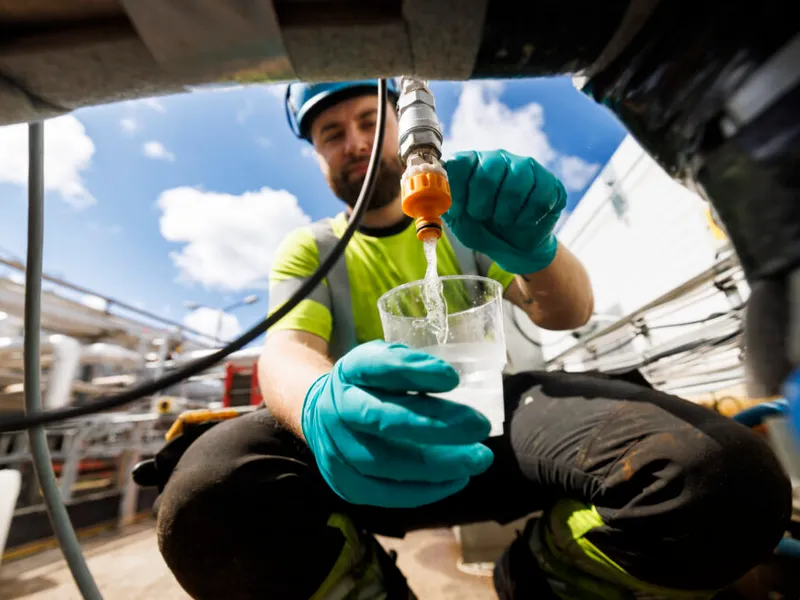
The major difference lies in how the waste is managed. With the Helios solution, process water is treated directly on site at the customer's location through low-temperature evaporation. The result is that approximately 90% of the water can be returned to a circular economy, while only approximately 10% remains as concentrate, which can be managed as waste or recovered as a resource, for example for biogas production.
This means that waste volumes are significantly reduced, transportation needs are decreased, and resources can be recovered instead of being completely lost through destruction.
The study has been reviewed by IVL Swedish Environmental Research Institute, which ensures that the climate calculation is representative with respect to methodology and selection of emission factors.