
Waste management for steel and foundries
Steel mills and foundries generate process water with high concentrations of metals, oils and salts from cooling, washing and surface treatment, among other things. Demanding operating environments, large waste volumes and high handling costs make robust waste management and efficient volume reduction critical.
Why waste management is important for steel and foundries
Stricter environmental requirements, high transport costs and large amounts of process water mean that steel mills and foundries need more efficient solutions for handling liquid waste.
Degreasing and surface treatment baths
Degreasing and surface treatment baths from steel and foundry processes contain high levels of oils, metals and chemicals, making conventional handling complex and costly.
One of the largest flows handled externally
Process water from steel mills and foundries is one of the largest flows handled externally. Transporting and destroying contaminated water is becoming increasingly expensive and often represents the largest single waste cost for steel mills.
Increased costs
The costs for transport and destruction of contaminated water are increasing as environmental requirements become stricter and waste costs rise. For industry, the management of liquid waste has become a growing economic and logistical challenge.
High water content
Liquid waste from steel mills and foundries often consists of large volumes of water with relatively low concentrations of contaminants. This leads to transportation and disposal of large amounts of water that could have been treated directly on site.
Waste management on-site.
Helios Innovations installs a compact, fully automated unit at your site that treats process water continuously and reduces waste volumes by up to 90%.
You pay per cubic meter of treated water. We own, operate and maintain the equipment. No capital investment, no technical risk.
What you can expect
≤90%
Volume reduction
Drastically reduced waste volumes to transport and destroy
100A
Electricity connection
We take care of the electricity cost
0
Investment
We own and operate the equipment
24/7
Automated operations
Fully automated, all maintenance is performed by Helios
Proven in steel & foundries
Ljunghäll
Steel & Foundries
Challenge
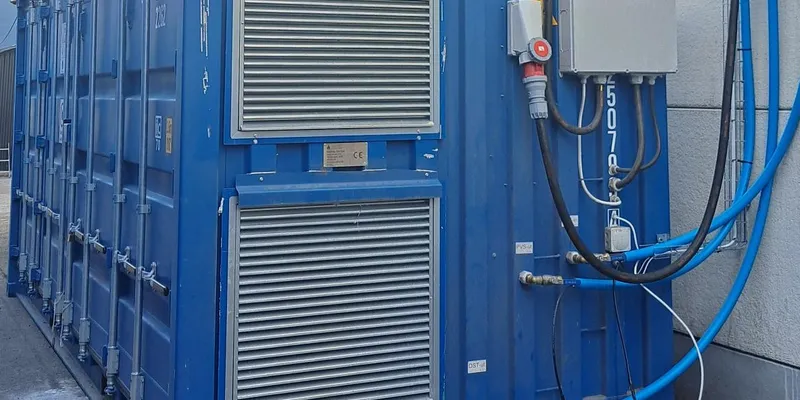
Ljunghäll in Södra Vi is Sweden's largest aluminum die-casting foundry and currently handles over 14,000 tons of emulsions and contaminated water in two traditional evaporators. From these evaporators, approximately 500 tons of concentrate with high water content is produced and sent away as waste. In addition to the concentrate, Ljunghäll needed to send away untreated emulsion as waste several times each month because the traditional evaporators often had problems cleaning all the water. The large volumes of liquid waste resulted in extensive transportation, high handling costs, and significant environmental impact. Ljunghäll needed a more sustainable and local solution to reduce the amount of liquid hazardous waste from the facility.
Solution
During 2026, a fully automated unit was installed with the capacity to treat 1,500 m³ of process water per year on-site at Ljunghäll. Through low-temperature evaporation, water is separated from the emulsion concentrate and the emulsions are concentrated to a significantly smaller residual volume. The purified water is then returned to Ljunghäll's existing treatment plant with ultrafiltration and carbon filter before it is discharged to the municipality's treatment plant. The fully automated solution enables stable and continuous operation while significantly reducing the amount of liquid waste from the site. Since the solution was installed in February 2026, Ljunghäll has been able to reduce the amount of emulsions and emulsion concentrate leaving the site as waste by approximately 80%.
Results
- 1,500 m³ process water treated per year
- ≤90% volume reduction
- 2026 production start
Elcowire
Steel & Foundries
Challenge
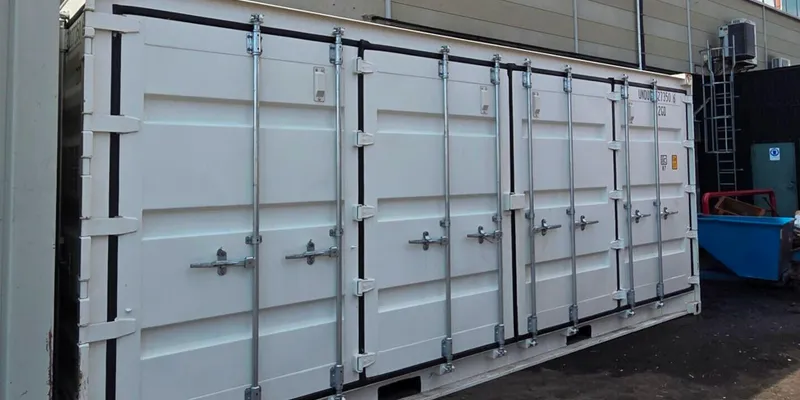
Process water from Elcowire's emulsions was previously transported to external incineration at high costs and significant environmental impact. Efficient management was needed to reduce fresh water consumption.
Solution
A local system that treats up to 1,000 m³ of process water per year from two production streams. Using low-temperature evaporation, water is separated from contaminants. After treatment, up to 950 m³ of water is returned to production with remaining isopropanol that reduces the need for new chemicals.
Results
- 1,000 m³ process water treated per year
- ≤95% waste volume reduction
- 3 m³/day treatment capacity
- ≤950 m³ water returned to production
- 2025 production start
Contact us
Get in touch for more information about how we can help you reduce the amount of liquid waste and your CO₂ emissions.